
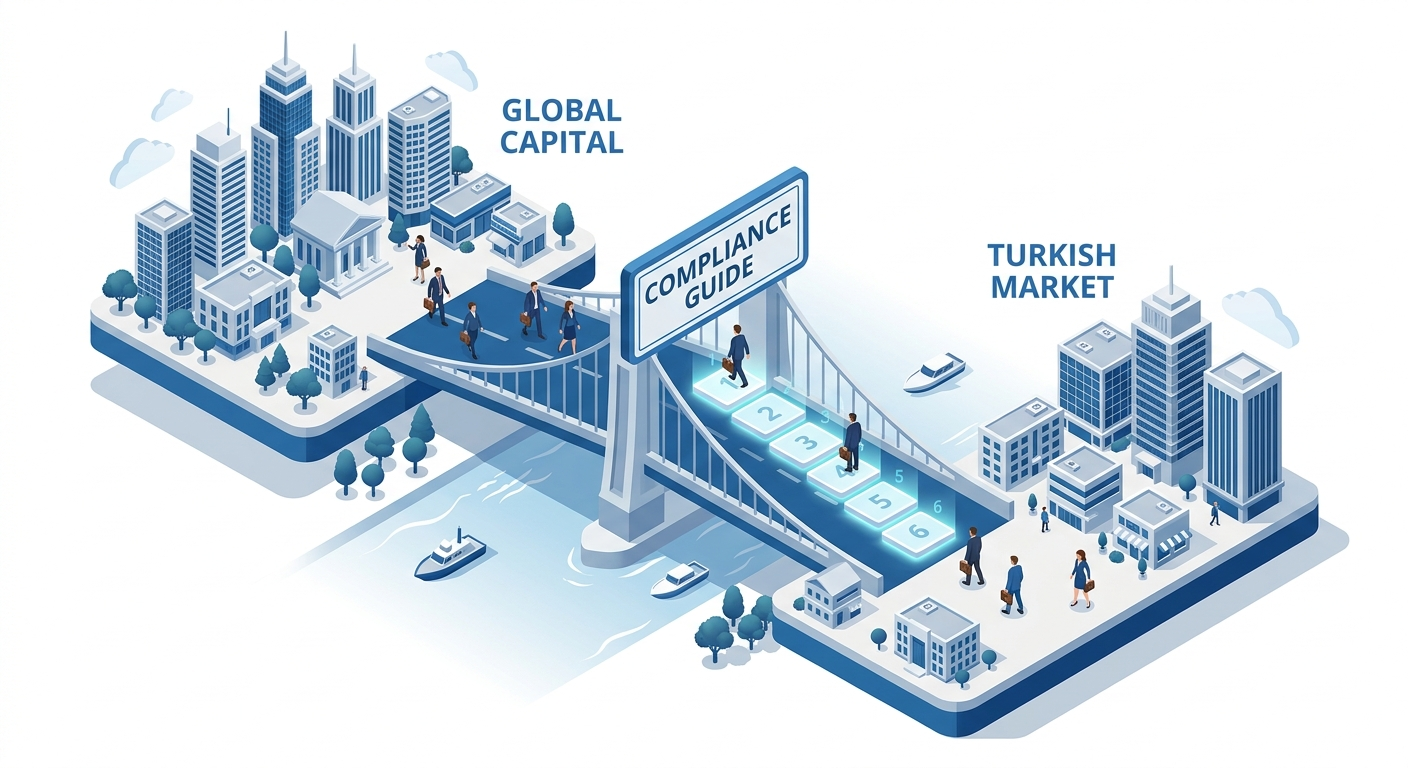
Successfully investing in Turkey requires more than just capital; it demands a deep understanding of the local regulatory landscape. Turkey remains a high-potential bridge between Europe and Asia, offering a dynamic workforce and a strategic geographical advantage. However, for a global CFO or CEO, the transition from IFRS-based global thinking to the local Tax Procedure Law (VUK) environment can be treacherous.
As a Senior Business Partner with over a decade of experience guiding multinationals, I have seen brilliant market entries stumble over preventable regulatory hurdles. Below are the six most critical mistakes foreign investors make and how you can turn these risks into compliant strategic advantages.
1. Choosing the Wrong Entity When Investing in Turkey
Many investors default to a Liaison Office to “test the waters,” only to realize they cannot engage in any commercial, revenue-generating activity. Conversely, choosing a Limited Liability Company (Ltd. Şti.) might seem simpler, but for global players, an Anonymous Company (A.Ş.) often provides better flexibility for share transfers and lower personal liability for board members regarding public debts.
- The Risk: Operational paralysis or unexpected personal liability for tax debts.
- Proactive Solution: Align your structure with your 5-year exit or expansion strategy. If you plan to scale or bring in VC funding, start as an A.Ş.
- Strategic Tip: Under VUK, capital increase processes are formal and require specific notarized resolutions. Unlike some jurisdictions where “authorized capital” is flexible, Turkey requires strict adherence to “paid-in capital” timelines.
2. Underestimating Local Labor Law & SGK Complexity
Turkey’s Labor Law is protective of the employee. Global HR manuals often fail to account for the mandatory Severance Pay (Kıdem Tazminatı) provisions or the nuances of Social Security (SGK) compliance.
- The Risk: High-cost labor lawsuits and the loss of significant social security premium incentives (up to 5%).
- Proactive Solution: Localize your employment contracts immediately. Ensure your payroll provider is calculating the “Employer’s Share” accurately, as these are not just deductions but direct costs to your P&L.
3. Delayed Tax Planning for Your Business Investing in Turkey
Foreign investors often treat tax as a year-end “accounting task.” By then, it’s too late to leverage Double Taxation Avoidance Treaties or apply for Investment Incentive Certificates (Yatırım Teşvik Belgesi) that offer VAT exemptions and customs duty waivers.
- The Risk: Overpaying corporate tax (currently 25%) and missing out on significant “Reduced Corporate Tax” rates.
- Proactive Solution: Perform a “Tax Health Check” before the first transaction. Proper documentation is key. Make sure to integrate your global policies with local transfer pricing compliance standards in Turkey to avoid penalties during audits.
- Strategic Tip: While IFRS focuses on the “substance over form,” Turkish VUK is strictly “form over substance.” If a document doesn’t meet specific VUK invoicing criteria, it is non-deductible, regardless of its economic reality.
4. The ‘Null Return’ Myth: The Cost of Inactivity
This is the most common pitfall. Many CFOs believe that if the company hasn’t started selling or hasn’t even opened a bank account, there is no reporting obligation. In Turkey, the moment your Tax Office registration is active, your filing obligations begin.
- The Risk: Heavy “special irregularity” fines and the potential suspension of your VAT ID. Even a “zero” or “null” return must be filed monthly.
- Proactive Solution: Set up a “Compliance Calendar” from Day 1. Ensure your local accountant files monthly VAT, Withholding (Muhtasar), and quarterly Provisional Corporate Tax returns, even if they show zero activity.
Tip: Beyond avoiding penalties, timely filing is a prerequisite for significant tax breaks. For instance, would you want to miss out on a 5% corporate tax reduction in Turkey just because a single return wasn’t filed on time? Tax compliance isn’t just about avoiding fines; it’s about qualifying for rewards.”
Note: Under VUK, failing to submit a return is penalized per document. For a global company with multiple branches, these “small” fines can escalate into a significant line item in your audit report.
5. Bureaucratic Delays: Signatures & Work Permits
The Turkish system relies heavily on the Signature Circular (İmza Sirküleri). A foreign CEO cannot simply sign a contract; their authority must be notarized and registered. Furthermore, the “1 to 5” rule (hiring five Turks for every one foreigner) often surprises tech startups seeking to bring in foreign talent.
- The Risk: Operational delays in banking, customs, and leasing.
- Proactive Solution: Start the Work Permit process early and appoint a local representative with limited “managerial” power to handle administrative filings to avoid waiting for a global CEO’s wet signature.
6. Selecting the Right Partners for Investing in Turkey
Working with an accountant who “just speaks English” is not the same as working with a Certified Public Accountant (SMMM) who understands IFRS/US GAAP reporting packs.
- The Risk: Data “lost in translation.” Your local VUK books might show a profit while your IFRS reporting shows a loss due to different depreciation rates or severance pay accruals.
- Proactive Solution: Partner with a firm that provides “Bridge Reporting.” You need advisors who can explain why the local statutory profit differs from your global consolidated management reports.
Success Checklist for Turkey
- [ ] Structure: Is your entity type optimized for your 5-year plan?
- [ ] Compliance: Are monthly “null” returns being filed?
- [ ] Incentives: Have you applied for VAT and Customs exemptions?
- [ ] Authority: Is your Signature Circular ready for banking and state integrations?
- [ ] Reporting: Do you have a monthly reconciliation between VUK and IFRS?
Secure Your Turkish Venture
The difference between a successful market entry and a costly exit lies in the details of local compliance. At Metropol CPA, we provide the “insider knowledge” required to navigate the complexities of the Turkish tax and legal landscape, ensuring your global vision is never hindered by local bureaucracy.
Contact us for a strategic consultation: 📧 info@metropolcpa.com | Your Bridge to Compliant Growth in Turkey.